ChatGPT Set to Become Your Personal Online Shopper and PowerPoint Creator

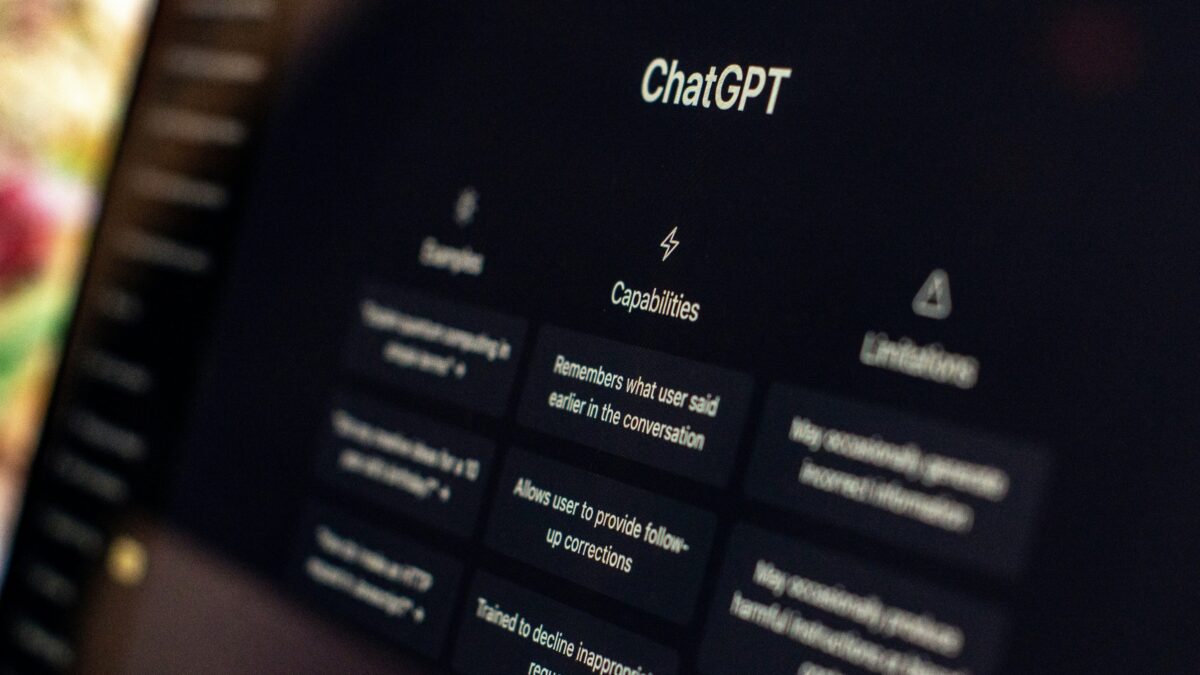
OpenAI is taking another leap toward mainstream AI adoption with the rollout of a new ChatGPT agent — a feature designed to perform complex, multistep tasks on behalf of users with minimal supervision.

Unveiled during a livestreamed event, the ChatGPT agent aims to simplify both personal and professional projects. Think: planning a meal, ordering all the necessary ingredients online, or drafting a business presentation from scratch.

The feature builds on two tools OpenAI introduced earlier this year:

  • Operator — capable of browsing, clicking, and typing across the internet like a human.
  • Deep Research — a system designed for in-depth, time-consuming online research.

By combining these capabilities, the ChatGPT agent can now execute detailed, goal-oriented tasks — from shopping for vintage lamps on Etsy and filling your cart, to creating early drafts of PowerPoint presentations that users can later refine.

Who Gets Access?

The new features will be available immediately to Pro, Plus, and Team subscribers, with a wider rollout planned for enterprise and education customers later this summer.

Why AI Agents Matter

Tech leaders, including OpenAI CEO Sam Altman, have called AI agents “the next giant breakthrough” — promising to save time and boost productivity by handling repetitive, multistep workflows.

The AI agent uses a virtual computer and web browser to perform tasks, adjusting its approach based on user feedback mid-process. However, OpenAI notes that while ChatGPT typically responds in seconds, agent-level tasks can take several minutes to complete.

Early Use Cases & Limitations

In a live demonstration, product manager Neel Ajjarapu tasked the agent with:

  1. Searching Etsy for vintage-style lamps under $200 with free shipping.
  2. Adding the best ones to the cart.
  3. Providing purchase links for each.

The tool has also been tested for drafting PowerPoint slides — though Ajjarapu cautions it’s best for “early rough drafts”, not polished presentations.

Safety First

With great capability comes risk. AI agents can be misused or make errors, so OpenAI has implemented safeguards:

  • Refusing certain tasks (financial or legal advice).
  • Seeking user permission for sensitive actions, such as purchases.
  • Requiring supervision for tasks like sending emails.

Room for Improvement

OpenAI’s Chief Product Officer Kevin Weil admits the technology isn’t perfect yet:

“It is far from perfect. But if we had gone back six or 12 months ago and said this was going to be possible today, we would have been pretty excited about it.”

As the AI agent matures, it could redefine how people shop, research, and prepare for work — bringing us closer to a future where AI handles the busywork so humans can focus on higher-value tasks.


China’s Unitree Launches $5,900 Humanoid Robot, Challenging Global Robotics Leaders

Unitree Robotics has just disrupted the global robotics market with the launch of its humanoid robot, R1, priced at an unprecedented 39,900 yuan ($5,900). The announcement comes as China ramps up its ambitions in AI and robotics, aiming to leapfrog the United States in one of the most transformative technologies of the century.

The R1 is lightweight at 25kg, equipped with 26 joints for fluid movement, and powered by multimodal AI capable of both voice and image recognition. This combination of affordability and advanced capability could make humanoid robots accessible to far more households, research labs, and businesses than ever before.

The unveiling coincided with the opening of China’s largest AI forum — the World Artificial Intelligence Conference in Shanghai — where top Chinese tech founders, senior Beijing officials, and venture capitalists gathered to discuss the nation’s AI roadmap.

A New Chapter in Robotics Accessibility

Historically, humanoid robots have been priced far out of reach for the average consumer. Morgan Stanley Research estimates that in 2024, the cost of the most sophisticated humanoids was around $200,000. Unitree’s pricing is a massive drop from its earlier models — the G1 at $16,000 and the H1 exceeding $90,000.

By comparison, rival UBTech Robotics Corp. recently announced plans for a $20,000 household companion humanoid, still more than triple the R1’s price.

Strategic Timing and Global Ambition

The launch isn’t just about affordability — it’s a statement of intent. In February, Unitree CEO Wang Xingxing stood alongside Chinese tech heavyweights Jack Ma (Alibaba) and Pony Ma (Tencent) in a high-profile meeting with President Xi Jinping, signaling state-level support for the country’s robotics push.

With use cases spanning from factory automation to household assistance and even potential military applications, humanoid robots are quickly becoming a strategic technology.

What’s Next?

If Unitree’s R1 performs as promised, it could become a landmark product in the democratization of humanoid robotics — much as the smartphone did for mobile computing. Lower prices mean faster adoption, more user feedback, and a stronger push toward real-world applications.

In an industry long dominated by U.S. firms like Boston Dynamics, China’s aggressive move into the market could accelerate competition worldwide.

A humanoid robot under $6,000 isn’t just a product launch — it’s a clear signal that the global robotics race is entering a new phase.

Telefónica Targets NATO and EU Defense Contracts with New 5G Battlefield Tech

Telefónica SA, one of Europe’s largest telecommunications companies, is eyeing expansion of its defense business beyond Spain as NATO and European Union allies ramp up military spending in response to growing security challenges.

Executive Chairman Marc Murtra said the Madrid-based carrier, which already provides critical network infrastructure to the Spanish army and security forces, sees opportunities to offer its expertise to “allied countries, whether within the European Union, within NATO or beyond.”

“We believe there will be European coordination to ensure there is no duplication of capabilities among allies,” Murtra told reporters, noting that Telefónica’s significant European presence in Germany and the UK provides a strong platform for expansion.

5G ‘Bubble’ for the Battlefield

Chief Operating Officer Emilio Gayo revealed that Telefónica has developed a prototype for a so-called “5G bubble” — a portable, high-speed private network capable of establishing a secure communications zone in combat or crisis scenarios. The company recently demonstrated this technology at a NATO event, highlighting its potential to enhance secure battlefield connectivity.

The 5G bubble is designed to provide:

  • High-speed, encrypted communications in contested environments
  • Rapid deployment for mobile operations
  • Flexible integration with existing military and security systems

Shifting Strategy Toward Defense

Murtra has been outspoken about making defense and security a strategic priority for Telefónica. In June, he criticized the company’s historically low investment in this sector and pledged to accelerate growth in military-focused solutions.

Telefónica’s defense profile rose sharply in 2023 when Saudi Telecom Co., a state-controlled entity, acquired a significant stake in the company. The Spanish government responded by purchasing a 10% holding to safeguard what it calls a “strategic company for Spain” due to its close ties to national security.

Murtra, who took the helm in January after serving nearly four years as non-executive chairman of defense contractor Indra Sistemas SA, has since brought in Borja Ochoa, Indra’s former global head of defense and security, as president of Telefónica Spain.

A Growing Market for Military Communications

Telefónica’s offerings for military and security forces include:

  • Fiber and satellite communications
  • Military-grade private networks
  • Cyber defense solutions

The move follows a broader trend among European telecom providers. Orange SA, for example, launched a dedicated Defense and Homeland Security division last month to address rising demand for secure communications systems.

AI Search Challenger Perplexity Hits $18 Billion Valuation With New Funding

Perplexity AI Inc., the artificial intelligence-powered search engine vying to challenge Google’s dominance, has secured fresh capital that pushes its valuation to $18 billion, according to a person familiar with the matter.

The Silicon Valley startup raised $100 million in the latest financing round, the person said, requesting anonymity due to the private nature of the deal. This transaction extends a previous funding round from just a few months ago, which had valued the company at $14 billion. The sharp valuation increase reflects the ongoing rush among investors to back leading players in the booming AI industry.

Perplexity declined to comment on the funding news. The Financial Times first reported some aspects of the deal.

Meteoric Rise

Founded in 2022, Perplexity has quickly established itself as one of the most prominent companies using generative AI to reimagine core internet services — in its case, search. Its AI-powered platform offers concise, direct answers to user queries, aiming to provide a faster and more intuitive alternative to traditional search engines.

The company’s growth trajectory has been extraordinary:

  • Last year, Perplexity’s valuation tripled from $1 billion to $3 billion.
  • Several months later, it tripled again, reaching $9 billion.
  • By early 2024, Perplexity was valued at $14 billion — and now, just months later, it has achieved the $18 billion milestone.

Funding Journey

In March, Bloomberg News reported that Perplexity was exploring a raise of up to $1 billion at an $18 billion valuation. The company ultimately proceeded with a smaller investment at a $14 billion value. This latest $100 million infusion returns Perplexity to its original target.

The surge in investor interest reflects a broader shift in Silicon Valley, where venture capital firms are racing to secure stakes in top-tier AI startups poised to reshape online search, productivity tools, and other core services.

As competition in AI search intensifies, Perplexity’s new funding positions it to expand its technology, grow its user base, and strengthen its position against tech giants like Google and Microsoft.

China’s $11 Trillion Stock Market Struggles to Win Back Investor Trust

Beijing, China – China’s stock market, valued at over $11 trillion, is drawing fresh scrutiny from investors and policymakers alike, as its poor performance continues to weigh on consumer spending and economic sentiment.

Despite a recent rally, Chinese indexes have only just returned to levels last seen a decade ago, following the dramatic market crash in 2015. In stark contrast, a $10,000 investment in the U.S. S&P 500 over the same period would have more than tripled in value, while China’s CSI 300 benchmark would have returned only about $3,000.

Analysts say this chronic underperformance is a major reason why Chinese households save more and spend less—a trend that has frustrated efforts by President Xi Jinping to stimulate domestic consumption and hit the government’s 5% GDP growth target.

Structural Challenges Undermine Confidence

Experts attribute the sluggish returns to structural issues: China’s exchanges were created to fund state-owned enterprises (SOEs), not to generate wealth for retail investors. This financing-first model has led to questionable IPO practices, limited transparency, and a lack of focus on investor returns.

Despite reforms aimed at tightening IPO rules and reducing fraud, progress has been slow. As of 2024, Chinese firms still dedicate just 0.2% of their market cap to share buybacks, compared to nearly 2% in the U.S., further signaling that shareholder value remains a secondary concern.

Investors Cautious Amid “IPO Boom”

China remained the world’s largest IPO market in 2022, but many newly listed firms have struggled. Cases like Beijing Zuojiang Technology, which modeled its product after Nvidia’s chips and was later delisted for violations, have eroded public trust.

Even so, IPO activity in 2025 is up nearly 30% year-over-year, with regulators fast-tracking listings of unprofitable companies to bolster China’s position in AI, semiconductors, and robotics — critical battlegrounds in its tech rivalry with the U.S.

Economic Implications and Global Impact

The market’s continued struggles are contributing to China’s high household savings rate (35% of disposable income) and weakening the foundation for sustainable economic growth. With the property sector still under pressure and limited social security, many families remain reluctant to spend.

In a rare move, China’s top leadership recently pledged to “stabilize housing and stock markets” and increase the attractiveness of domestic capital markets, but concrete policy shifts remain limited.

Geopolitical Relevance

As the U.S.–China tariff war heats up, the performance of China’s domestic stock market has become a geopolitical flashpoint. With both President Xi and Donald Trump taking hard stances on trade, tech, and economic dominance, a fragile capital market could become a key vulnerability for Beijing — and a potential lever for Washington.

Firefly Aerospace Boosts IPO Target to $697 Million, Eyes $6 Billion Valuation

Firefly Aerospace Inc., the Texas-based space technology company, has raised the size of its upcoming initial public offering (IPO) to as much as $697 million, signaling strong investor interest in the rapidly growing commercial space sector.

According to a filing with the US Securities and Exchange Commission (SEC) on Monday, Firefly plans to sell 16.2 million shares at a price range of $41 to $43 per share. This marks an increase from the company’s earlier target of $35 to $39 per share.

At the top of this range, Firefly’s market capitalization would reach $6 billion, with a fully diluted valuation — including stock options and warrants — of roughly $6.8 billion. The IPO is expected to price on August 6, Bloomberg reported, citing a marketing presentation.

Rising Financial Ambitions

The company’s most recent earnings report showed a net loss of $60.1 million on $55.9 million in revenue for Q1 2025. This represents a significant revenue jump from $8.3 million in the same quarter last year, when Firefly posted a $52.8 million loss.

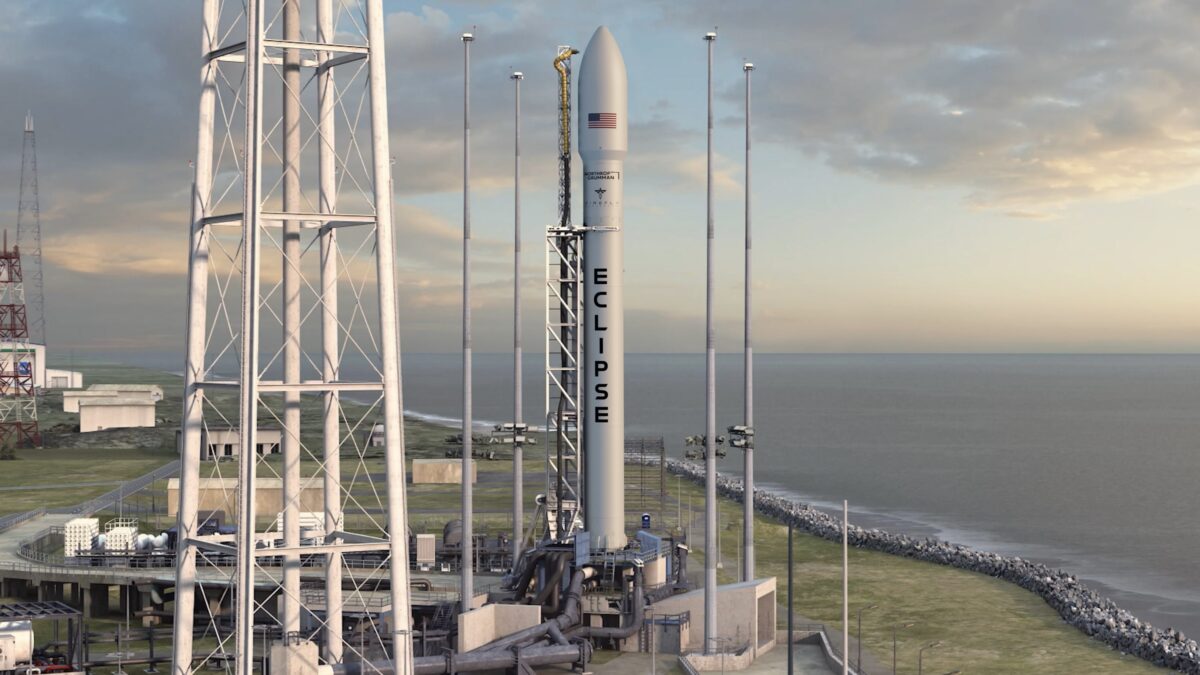
In May 2025, Firefly raised $50 million in a funding round led by Northrop Grumman Corp. The aerospace giant is collaborating with Firefly to develop a next-generation rocket for space station resupply missions, as well as commercial and national security launches.

Backed by Strong Investors

The company’s Series D-3 round earlier this year valued it at $2.95 billion, according to PitchBook data. Firefly is majority-owned by AE Industrial Partners, an aerospace and defense-focused private equity firm that acquired its stake in 2022 from Noosphere Venture Partners. Post-IPO, AE will retain majority voting control.

IPO Underwriters & Market Debut

Goldman Sachs, JPMorgan, Jefferies, and Wells Fargo are leading the offering. Firefly shares are set to list on the Nasdaq Global Market under the ticker FLY.

With growing demand for launch vehicles, spacecraft, and satellite delivery services, Firefly’s IPO could position it as one of the most closely watched space technology public debuts of 2025.